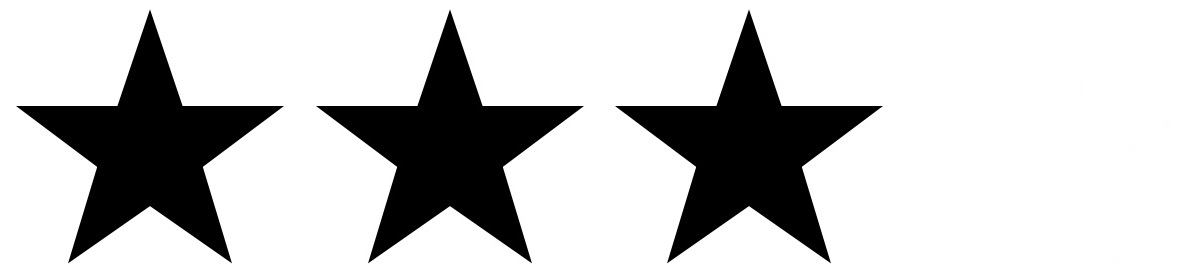
What happens when you squeeze every last breath of air from a movie? The answer is Broken, a short and dense film, crammed to the brim with interconnecting narratives, each one of which is of interest, although perhaps of too much interest to survive alongside so many others. Cull a few, and there's no reason that the remaining few couldn't achieve the same harrowing effect. It'd only feel less manipulative, that's all. If you're searching for blame, it can be found not in Mark O'Rowe's screenplay nor in Rufus Norris' debut direction, but in their source novel by Daniel Clay - all this simplistic, soap opera melodrama might make quite the impression on the page, but condensed into 80-odd minutes, Broken becomes an emotional assault. Your instinct may be to react with sincere empathy at the troubles depicted onscreen at first, only then to react with sincere scepticism and frustration at the escalating tragedy, as contrivance upon contrivance, catharsis upon catharsis is affixed. O'Rowe's intention is that every scene has purpose, yet there is purpose in deliberately-paced character development, or variation of tone and mood, both broadly absent - Norris' direction proves up to this task, in impeccable framing and blocking, and a thorough assuredness with all elements of filmmaking (although he is sporadically over-reliant on gauche, affected editing). And O'Rowe's dialogue is faultless, leading to a wealth of marvellous performances, especially from newcomer Eloise Laurence, whose acting quality is the very definition of natural, unassuming charisma.
Thursday, 7 February 2013
Wednesday, 6 February 2013
VISUAL EFFECTS SOCIETY WINNERS
Outstanding Visual Effects in a Visual Effects-Driven Feature Motion Picture
Thomas Fisher, Susan MacLeod, Guillaume Rocheron and Bill Westenhofer (Life of Pi)
Outstanding Supporting Visual Effects in a Feature Motion Picture
Felix Bergés, Sandra Hermida and Pau Costa Moeller (The Impossible)
Matt Aitken, Victor Huang, Christian Rivers and R. Christopher White (The Hobbit: An Unexpected Journey)
Outstanding FX and Simulation Animation in a Live Action Feature Motion Picture
Harry Mukhopadhyay, David Stopford, Mark Williams and Derek Wolfe – ‘Storm of God’ (Life of Pi)
Monday, 4 February 2013
UK REGIONAL FILM CRITICS ANNOUNCE
Film of the Year
Argo
Director of the Year
Sam Mendes (Skyfall)
Screenplay of the Year
Amy Jump, Alice Lowe and
Steve Oram (Sightseers)
Rising Star
Ben Whishaw (Skyfall)
British Performance of
the Year
Robert Pattinson (The
Twilight Saga: Breaking Dawn – Part 2)
REVIEW - MAMA
As much as Andres Muschietti follows all the rules in adapting his short film into a feature-length one, I give him credit for his conviction, and the polished, considered approach he takes to directing this stock horror film. Such careful consideration, however, drains Mama of the potential to surprise or to truly shock, and since he is disappointingly reliant upon jump scares to maintain our interest, this is a misjudgement, one that slows the film down. He plays on ideas hardly original to the genre, but with the occasional air of creepy portentousness that hits just the right note - equal parts intriguing and spine-chilling. These are abandoned as time passes, and the story lumbers around in circles, with an over-familiar backstory, loose ends as big as your leg, and the obligatory noisy nighttime-set finale, replete with CGI and a villain who has become far too humanised to be frightening any more. Like many filmmakers, Muschietti understands that suggestion is scarier than showing, but ends up showing anyway. His use of the more blatant horror tropes, the dream sequences, the shadowy monster, is generally pretty successful, yet consistently undermined by the familiarity of the material, and the leaden pace with which it gets nowhere. Jessica Chastain is convincing as a rock chick reluctantly accepting guardianship of two feral young girls whose history is far more interesting than the melodramatic story told for the majority of this dull film. It's inventive and unhinged, and quite unsettling. Everything Mama is otherwise not.
Sunday, 3 February 2013
OSCAR PREDICTIONS 15 - 3 WEEKS TO AWARDS
Still on the Argo boat, also on the Lincoln boat. First time I've swung both ways at once! In this respect at least...
Best Picture
Argo
(Ben Affleck, George Clooney and Grant Heslov)
Best Directing
Steven
Spielberg (Lincoln)
Best Actor in a Leading
Role
Daniel
Day-Lewis (Lincoln)
Best Actress in a Leading
Role
Jennifer
Lawrence (Silver Linings Playbook)
Best Actor in a
Supporting Role
Tommy
Lee Jones (Lincoln)
Best Actress in a
Supporting Role
Anne
Hathaway (Les Misérables)
Best Writing (Original
Screenplay)
Michael
Haneke (Amour)
Best Writing (Adapted
Screenplay)
Chris
Terrio (Argo)
ANNIE AWARDS
Animated Feature
Wreck-It Ralph
Directing in a Feature Production
Rich Moore (Wreck-It Ralph)
Voice
Acting in an Animated Feature Production
Alan Tudyk (Wreck-It Ralph)
Writing in
an Animated Feature Production
Phil Johnston and Jennifer Lee (Wreck-It Ralph)
ART DIRECTORS GUILD WINNERS
Best Production Design - Period Film
Sarah Greenwood (Anna Karenina)
Best Production Design - Fantasy Film
David Gropman (Life of Pi)
Best Production Design - Contemporary Film
Dennis Gassner (Skyfall)
DIRECTORS GUILD OF AMERICA WINNERS
Outstanding Directorial Achievement in Feature Film
Ben Affleck (Argo)
Outstanding Directorial Achievement in Documentary
Malik Bendjelloul (Searching for Sugar Man)
REVIEW - BEYOND THE HILLS
A potentially scarring experience, rendered admirable but not quite as impactful as intended by an avoidance of sensationalism. Director Cristian Mungiu is a fraction too civil in his portrayal of unyielding Orthodox Christians in a barren monastery in rural Romania. Their harsh conditions and glum lifestyles are depicted accurately but not evocatively. We see but we do not feel. We do not even always see, and Mungiu's literal approach to this story wards off any subtextual depths, psychological or social, like the nuns obsessively ward off the influences and manifestations of evil, as they see it. It's an austere, pure, pious style of filmmaking, well-matched to the material but perhaps not well-suited, and he employed it to indelible effect in his acclaimed 4 Months, 3 Weeks and 2 Days, but to lesser effect here. The story circles around itself several times, and an air of pointlessness eventually undermines any atmosphere created by the sensitive cinematography and excellent, unaffected performances from the cast. Still, Mungiu is a highly skilled director, with an immaculate sense of space and blocking, and a subtly creative eye and ear for indirect methods of storytelling, which he uses most efficaciously. Characterisation is superb, as is the portrayal of life under specific circumstances, be this for the nuns and their priest, whose roles and relationships are immediately clear, or for the inhabitants of the nearby town, so expressively related in very limited screentime. The film teeters on the edge of horror toward the end, but Mungiu's unrelenting ambiguity of tone prevents it from fully succumbing, which is only to its detriment - a more tangible sense of claustrophobia would have had great effect, and the film becomes brash and manic just when it ought to become close and tense. All sacrificed in the name of realism. I shouldn't complain.
Saturday, 2 February 2013
REVIEW - TED
There are lines you just don't cross. Offense is subjective, so it can be hard to gauge where these lines are, but they do exist. I applaud those who toy with these lines, whether ironically or plain recklessly, but even then, there are still lines you just do not cross. You know Seth MacFarlane generally only wants to wind up the puritans, so vulgarity is on the moderate end of the scales here, as is the strength of social or cultural jokes (his act of subverting homophobia and other prejudices by employing them in his humour is unsubtle and has become overused, though). I suppose his goal is to emphasise his intelligence in wrapping his verbal jokes up in layers of excessive - and unrealistic - verbosity, but he surely only ends up confusing those whom the jokes are aimed at, and embarrassing those who understand the linguistic grandiloquence. MacFarlane also unknowingly stumbles over one line, despite marked attempts to counter this movement: his female lead, played by Mila Kunis, eventually becomes an accessory to the action and a pawn in other peoples' stories. She is generously given her own point of view, and is portrayed as the sensible character in her relationship, but her only pressing concern seems to be her man. She has every reason to leave him, and does, until she returns to him, learning to love his impudence, fecklessness, and intrusive best friend, for apparently nothing in return but a ring. I wanted more of her (in a better film), more of Mark Wahlberg's naked rear end, and less of that wiseass teddy bear. He's the one who crosses the line. He disses Katy Perry. There are lines you just don't cross.
Subscribe to:
Posts (Atom)